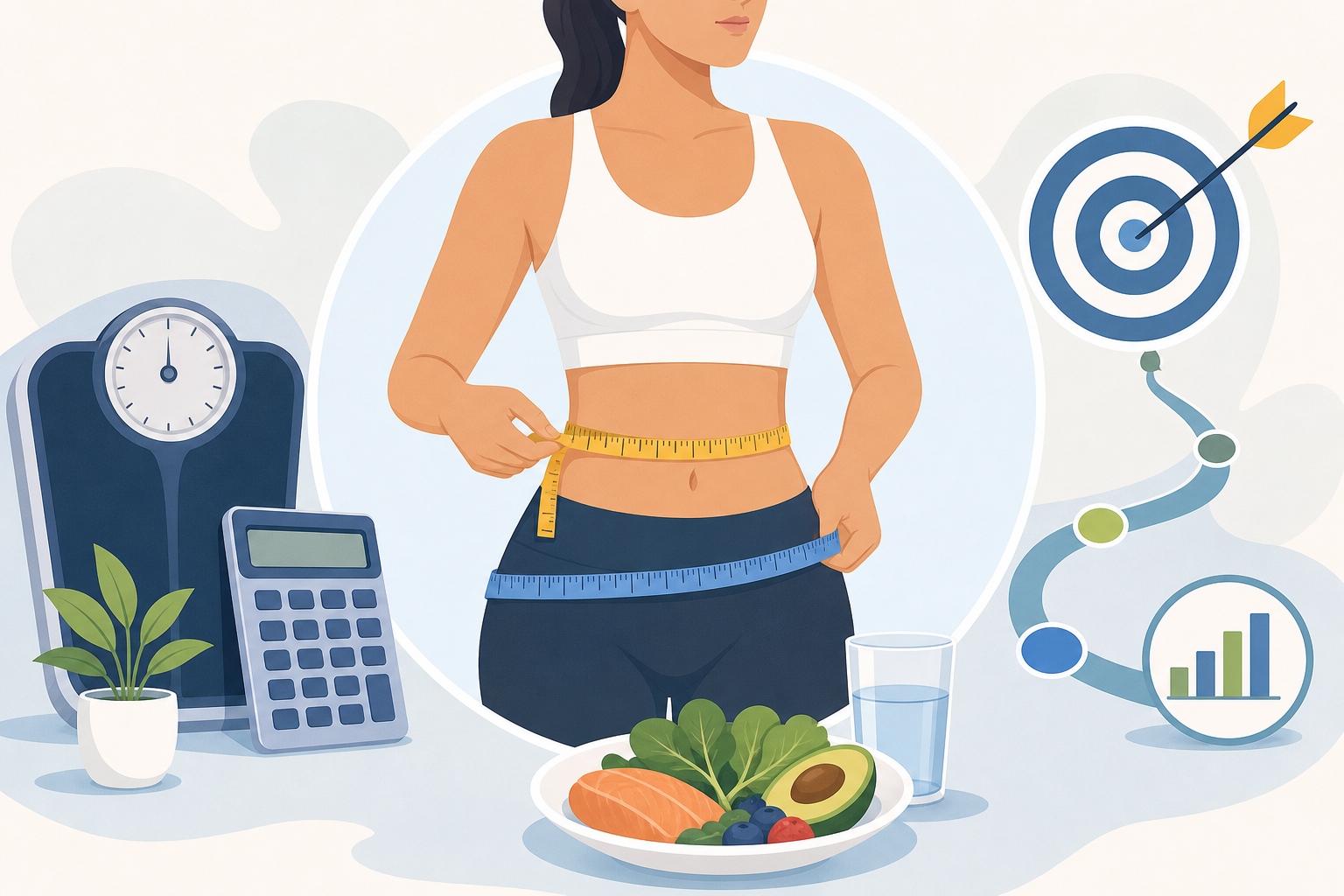
What is waist to hip ratio? It is a comparison between the circumference of your waist and the circumference of your hips. The result is a unitless number that offers a simple description of body fat distribution, but it does not directly measure body fat percentage or provide a complete assessment of health.
What is waist to hip ratio and what does it mean?
Waist-to-hip ratio shows how large your waist measurement is relative to your hip measurement. It is calculated by dividing waist circumference by hip circumference.
A lower ratio means the waist is smaller relative to the hips. A higher ratio means the waist and hip measurements are closer in size, or that the waist is larger relative to the hips.
The ratio is commonly used as a basic description of body shape and fat distribution. However, it cannot show exactly how much fat a person has, where all of that fat is located, or why their measurements have a particular pattern.
It is also different from body mass index, which compares weight with height. Each measure describes a different aspect of body size, so the numbers should not be treated as interchangeable.
How to calculate waist-to-hip ratio
The formula is:
Waist-to-hip ratio = waist circumference ÷ hip circumference
Both measurements must use the same unit. You can use centimetres or inches, but you should not divide a measurement in centimetres by one in inches without converting first.
Because the same unit appears on both sides of the calculation, it cancels out. This makes waist-to-hip ratio unitless.
Example calculation
Consider a person with a waist circumference of 90 cm and a hip circumference of 100 cm:
90 ÷ 100 = 0.90
Their waist-to-hip ratio is 0.90. The same body measurements recorded in inches would produce the same ratio, provided both were converted accurately.
| Measurement | Value |
|---|---|
| Waist circumference | 90 cm |
| Hip circumference | 100 cm |
| Calculation | 90 ÷ 100 |
| Waist-to-hip ratio | 0.90 |
How to measure your waist and hips consistently
The calculation is simple, but the result depends on how the measurements are taken. Small differences in tape position, clothing, posture or tape tension can change the ratio.
Use a flexible, non-stretch measuring tape and follow one measurement method consistently. If a calculator, clinician or research protocol specifies particular anatomical points, use those instructions rather than switching between methods.
Taking a waist measurement
- Measure against the skin or over thin clothing.
- Stand upright in a relaxed position.
- Keep the tape horizontal around the body.
- Make the tape snug without pressing deeply into the skin.
- Record the measurement under normal, relaxed breathing rather than deliberately pulling in the abdomen.
Taking a hip measurement
- Stand with your weight distributed normally.
- Place the tape around the widest part of the hips and buttocks.
- Check from the side, or use a mirror, to keep the tape level.
- Avoid twisting the tape or pulling it unusually tight.
It can be helpful to take each measurement more than once. If repeated readings differ, check the tape position and technique before recording a value. For comparisons over time, try to use the same tape, measurement locations and general conditions.
How the ratio describes body fat distribution
Body fat distribution refers to the pattern of where body fat tends to be carried. Waist-to-hip ratio approaches this indirectly by comparing the size of the waist with the size of the hips.
For example, two people may have the same hip circumference but different waist measurements. The person with the larger waist measurement will have the higher waist-to-hip ratio. Similarly, two people with the same waist measurement may have different ratios if their hip circumferences differ.
This is why the result should be understood as a comparison between two circumferences, not as a direct measurement of abdominal fat. Waist size may reflect several factors, while hip circumference includes bone structure, muscle, fat and other tissues.
The ratio also does not reveal total body fat. A person can have a particular waist-to-hip ratio at different body weights or body compositions. Changes in either the waist or the hips can alter the result.
What a waist hip ratio calculator can and cannot tell you
A waist hip ratio calculator performs the division after you enter your waist and hip measurements. This reduces the chance of a basic arithmetic error and may make it easier to record results consistently.
What the calculator can tell you
- Your waist circumference divided by your hip circumference.
- How your waist size compares with your hip size at the time of measurement.
- Whether the ratio has changed between measurements, assuming the same technique was used.
- Supporting information included by the tool about how to understand the estimate.
What the calculator cannot tell you
- Your body fat percentage.
- The exact amount or location of body fat.
- Your muscle mass, bone structure or overall body composition.
- The cause of a change in waist or hip circumference.
- Your overall health status or future health outcome.
The calculator does not measure you directly. Its output is only as reliable as the measurements entered. A typing error, mismatched units or inconsistent tape placement can produce a misleading result.
Body-size measures are most useful when considered alongside broader information rather than in isolation. The US National Institute of Diabetes and Digestive and Kidney Diseases provides general context about weight management and factors that may form part of a wider assessment.
How to interpret changes in your ratio
A change in waist-to-hip ratio means that the relationship between the two measurements has changed. It does not automatically explain what caused the change.
For instance, if waist circumference decreases while hip circumference remains the same, the ratio will decrease. If hip circumference increases while the waist remains unchanged, the ratio will also decrease. Conversely, a larger waist measurement or a smaller hip measurement can increase the ratio.
Measurement variation must also be considered. A tape placed slightly higher or lower, a change in posture, bulky clothing or different tape tension may affect the reading even when the body has not changed meaningfully.
For tracking, focus on consistent methods rather than frequent measurements under changing conditions. A single result is a snapshot, while a series of consistently collected measurements may provide clearer context.
Frequently asked questions
Is waist-to-hip ratio the same as waist circumference?
No. Waist circumference is one measurement around the waist. Waist-to-hip ratio compares that measurement with hip circumference, so changes in either value can affect the result.
Does waist-to-hip ratio measure body fat percentage?
No. It describes the relative size of the waist and hips. It does not calculate what percentage of the body consists of fat and cannot separate fat from muscle, bone or other tissues.
Can I use inches instead of centimetres?
Yes. Use either inches or centimetres, provided the waist and hip measurements use the same unit. The ratio will be the same because the units cancel during division.
Why did my ratio change when my waist stayed the same?
The ratio may change if hip circumference changes. It may also vary because of differences in tape position, clothing, posture or measurement technique.
Should waist-to-hip ratio be used on its own?
It is better viewed as one limited piece of body-size information. It does not capture overall body composition, medical history, physical function or the many other factors relevant to health and weight management.
Putting the result in context
When asking what is waist to hip ratio, the simplest answer is that it is waist circumference divided by hip circumference. It provides a convenient way to describe body fat distribution through relative body measurements.
Its main strengths are simplicity and ease of calculation. Its limitations are equally important: the result depends on consistent measuring and cannot directly determine body fat, explain body shape or summarise a person’s health.