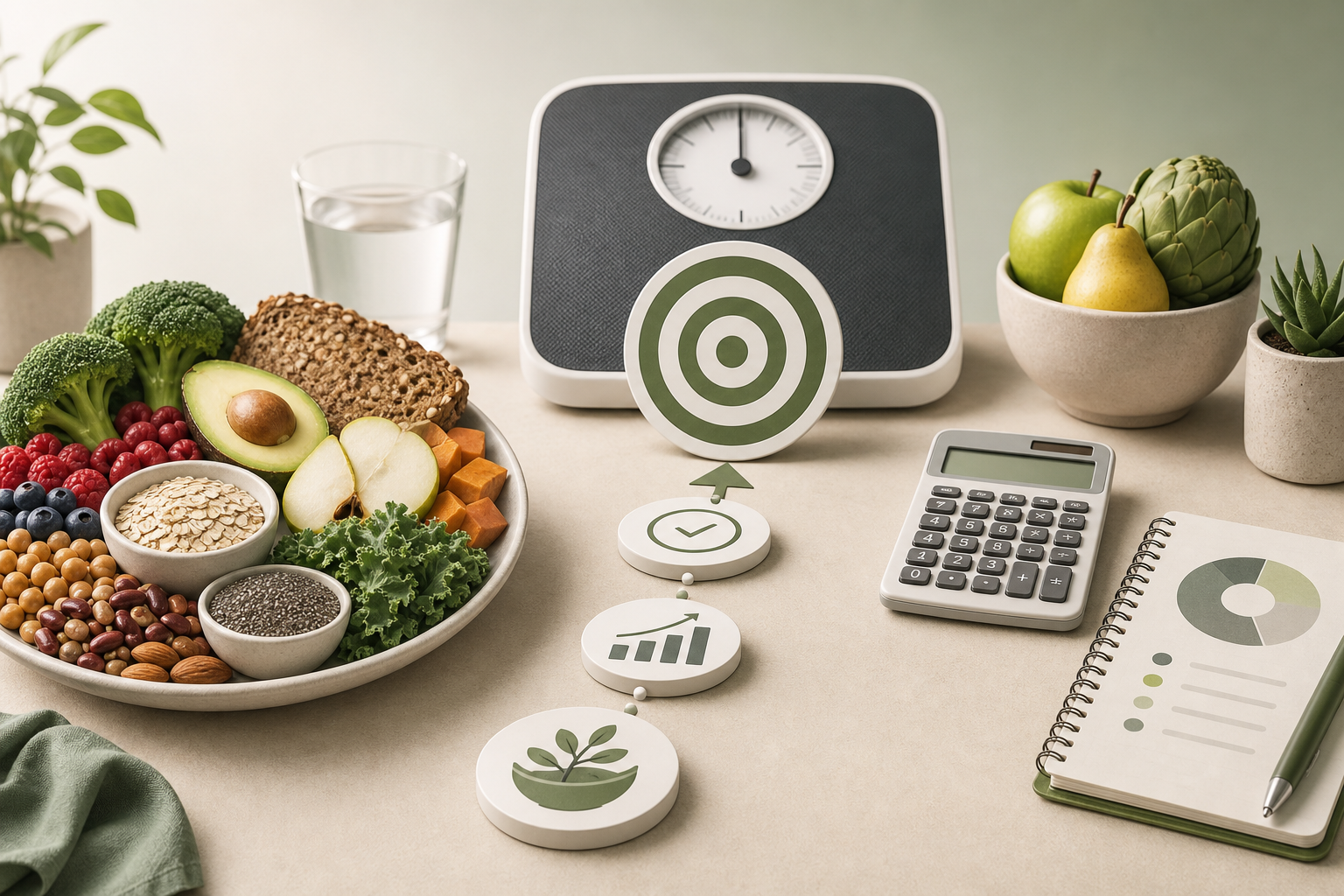
If you are asking how much fibre is recommended on a 2000calorie diet, the calorie-based estimate is 28 grams of fibre per day. This comes from a commonly used Dietary Reference Intake basis of 14 grams of fibre for every 1,000 kilocalories consumed. It is a practical planning target rather than a measured value or a personalised prescription.
How much fibre is recommended on a 2000calorie diet?
For a daily energy intake of 2,000 kcal, the calculation is:
2,000 kcal × 14 g ÷ 1,000 kcal = 28 g of fibre per day
This means that someone planning meals around 2,000 kcal could use 28 g as an estimated daily fibre intake target. The method reflects the relationship between fibre and energy intake described in the Dietary Reference Intakes from the National Academies.
The result should not be interpreted as a requirement that must be met exactly every day. Food intake naturally varies, so it may be more practical to look at the overall pattern across several days while still aiming for a varied diet.
How the calorie-based fibre calculation works
The calculation uses 14 g of fibre per 1,000 kcal:
Fibre target = daily calories × 14 ÷ 1,000
Dividing calories by 1,000 identifies how many 1,000-kcal units are being consumed. Multiplying that result by 14 provides the estimated grams of fiber per day.
- At 1,500 kcal: 1,500 × 14 ÷ 1,000 = 21 g
- At 1,800 kcal: 1,800 × 14 ÷ 1,000 = 25.2 g
- At 2,000 kcal: 2,000 × 14 ÷ 1,000 = 28 g
- At 2,200 kcal: 2,200 × 14 ÷ 1,000 = 30.8 g
- At 2,500 kcal: 2,500 × 14 ÷ 1,000 = 35 g
These figures are calculated estimates. They do not measure how much fibre a person actually eats, and they do not account for every factor that may affect an individual’s needs or tolerance.
Why individual fibre needs may differ
A 28 g target is useful for planning a 2,000-kcal diet, but calorie intake is not the only consideration. Food preferences, usual eating patterns, digestive tolerance and health conditions may all affect how a person approaches fibre.
Some people already eat fibre-rich meals and can meet the estimate without major changes. Others may need to adjust their food choices gradually. Increasing fibre quickly can be uncomfortable for some people, so a gradual approach may be easier to tolerate.
Adequate fluid intake is also relevant when increasing fibre. Fluid needs are individual and can be affected by factors such as activity, climate and health status, so there is no single fluid amount that is appropriate for everyone.
People who have been advised to follow a modified-fibre diet should use that individual guidance rather than relying only on a calorie-based estimate. The same applies when digestive symptoms or a medical condition affect which foods are suitable.
Putting a 28 g daily fibre target into practice
Fibre is found naturally in plant foods, including vegetables, fruit, beans, lentils, whole grains, nuts and seeds. Choosing several types across the day can be more practical than trying to obtain most of the target from one meal or one food.
A practical meal-planning scenario
Consider someone who usually has refined cereal at breakfast, a low-fibre sandwich at lunch and a meal based mainly on refined grains at dinner. Instead of changing everything at once, they could build fibre into existing meals step by step.
- Breakfast could include a wholegrain cereal or oats with fruit.
- Lunch could include wholegrain bread and a vegetable or bean-based side.
- A snack could include fruit, nuts or seeds, depending on individual needs and preferences.
- Dinner could combine vegetables with beans, lentils or a wholegrain option.
The precise fibre total depends on the foods, brands and serving sizes selected. Nutrition labels and reliable food composition information can help measure actual intake more accurately than judging foods by appearance.
Spread fibre across the day
There is no need to consume all 28 g at one meal. Distributing fibre among meals and snacks can make the target easier to plan and may be more comfortable for people who are increasing their intake.
It is also helpful to distinguish between the target and actual consumption. The 28 g figure is an estimate based on calories; the amount eaten must be calculated from the portions and fibre content of the foods consumed.
What a fibre intake calculator can and cannot tell you
A fibre intake calculator applies the same energy-based formula automatically. You enter the requested calorie value, select the relevant options and calculate the result.
What the calculator can estimate
- A fibre planning target based on daily calorie intake.
- The result of the 14 g per 1,000 kcal formula.
- How the estimate changes if planned calorie intake changes.
- A consistent starting point for reviewing meal choices.
What the calculator cannot determine
- How much fibre you currently consume unless detailed food intake is entered separately.
- Whether a particular fibre level will be comfortable for you.
- Which fibre-rich foods suit your preferences, allergies or health needs.
- Whether your estimated calorie intake accurately reflects your usual intake.
- Whether you need an individually modified amount because of a medical condition.
The output is only as relevant as the calorie value entered. If 2,000 kcal is a general reference figure rather than your usual energy intake, the resulting 28 g should also be treated as a general example rather than a personalised target.
Frequently asked questions
Is 28 g of fibre a day exact for everyone eating 2,000 calories?
No. It is an energy-based planning estimate produced by applying 14 g per 1,000 kcal. Individual tolerance, eating patterns and health considerations can affect what is appropriate.
Should I use 2,000 calories if my intake changes from day to day?
You can use an approximate average calorie intake for general planning. If your daily intake varies substantially, fibre estimates will also vary under the calorie-based method. There is usually no need to treat small day-to-day differences as exact targets.
Does the 28 g estimate include fibre from supplements?
The estimate refers to total daily fibre. However, a calculator does not determine where that fibre comes from. Food labels and supplement labels should be reviewed separately when estimating actual intake.
Can I meet the target with one high-fibre meal?
Mathematically, fibre from all meals contributes to the daily total. In practice, many people may find it easier to include fibre-containing foods at several meals and snacks rather than concentrating a large amount into one sitting.
What should I do if increasing fibre causes discomfort?
Consider whether the increase was rapid and whether adequate fluids accompanied it. A slower change may be easier to tolerate. Persistent or significant symptoms warrant individual advice rather than continued increases based only on a calculator result.
Are “fibre” and “fiber” the same thing?
Yes. “Fibre” is the spelling commonly used in British and international English, while “fiber” is common in American English. Both terms refer to the same dietary component, so recommendations for fibre intake and fiber per day describe the same concept.
The bottom line
The direct answer to how much fibre is recommended on a 2000calorie diet is approximately 28 g per day, based on 14 g per 1,000 kcal. This is a calculated planning estimate, not a measurement of current intake or an individual prescription.
A fibre intake calculator can apply the formula consistently, while food labels and portion information are needed to estimate how much fibre is actually consumed. Personal tolerance and relevant health guidance should also be considered when adjusting intake.