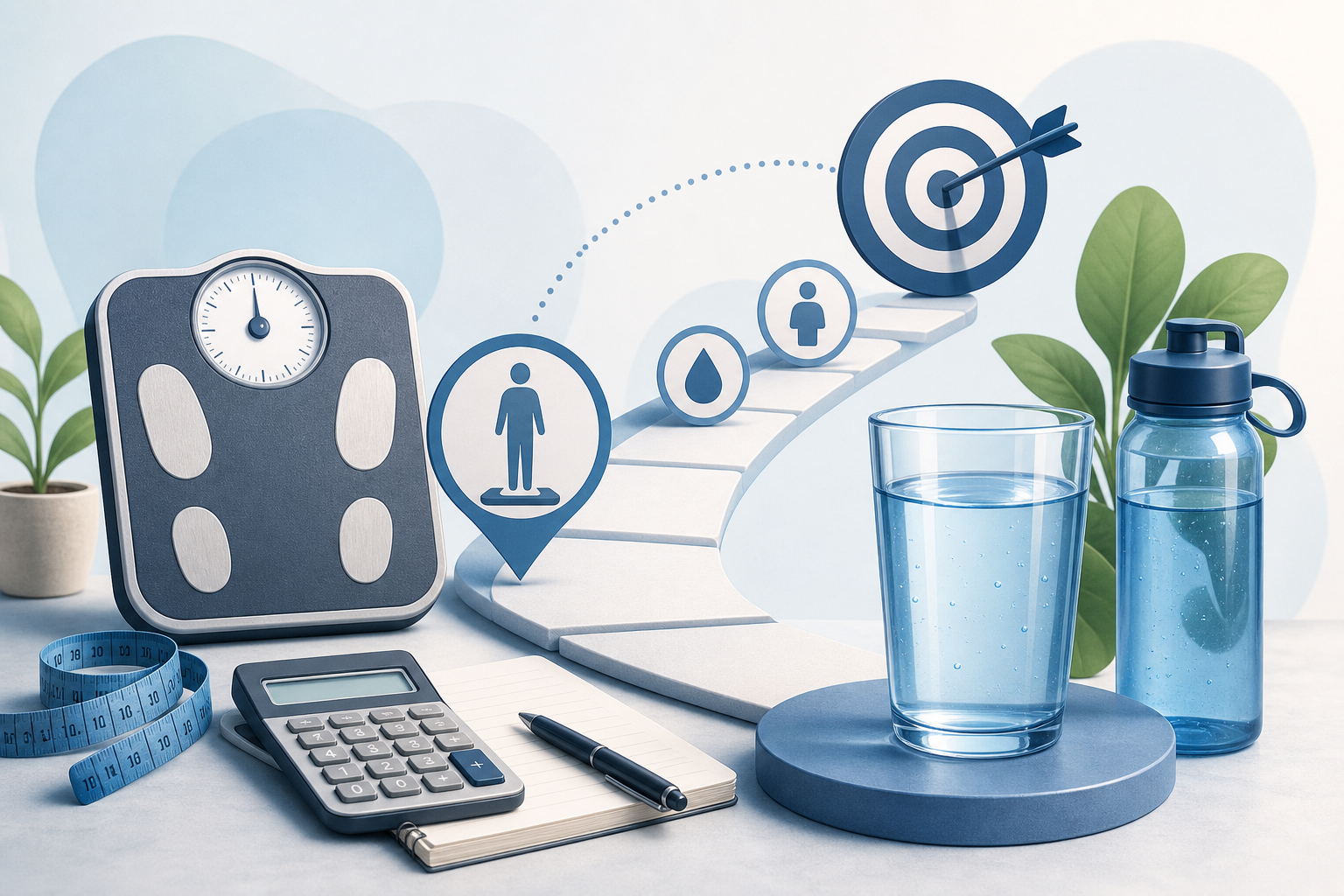
Yes, body size can influence hydration planning, but weight alone does not determine an exact requirement. When asking does body weight affect daily water needs, the most useful answer is that it may be one relevant factor among many. Activity, climate, diet, pregnancy, breastfeeding, illness and medications can all change fluid needs, sometimes more than body weight does.
Does body weight affect daily water needs in a predictable way?
A larger body generally contains more total water than a smaller body, so body size can help explain why two adults may not have identical fluid needs. However, this does not mean that everyone should calculate intake from a fixed amount of water per kilogram of body weight.
Body weight does not reveal how much fluid a person loses through sweating, breathing or urination. It also does not show how much water they receive from food, whether they are physically active, or whether their environment is hot and humid.
Body composition adds another complication. Two people at the same weight may have different proportions of body tissues and different activity patterns. Their daily water intake may therefore differ even though the number on the scale is the same.
For these reasons, weight-based formulas are best viewed as rough planning methods rather than precise physiological measurements. A person’s weight can provide context, but it should not be treated as the sole input.
What counts as daily water intake?
Daily water intake means more than glasses of plain water. “Total water” includes water from drinking water, other beverages and moisture in foods.
Foods such as fruit, vegetables, soups, yoghurt and cooked grains may contribute meaningful amounts of water. The amount supplied by food varies with a person’s diet, so total-water guidance should not be interpreted as a requirement to drink the entire amount as plain water.
The National Academies’ Dietary Reference Intakes for Water provide adult Adequate Intake values of approximately:
- 3.7 litres of total water per day for men
- 2.7 litres of total water per day for women
These figures include both beverages and food moisture. They are population-level reference values based on observed intake patterns, not measured requirements for every individual.
An Adequate Intake is also not a daily target that must be reached exactly. Intake and fluid losses naturally vary from one day to another.
Why body weight is only one part of hydration planning
Water needs depend on how much fluid enters and leaves the body. Body size may affect this balance, but several other variables can substantially change it.
Physical activity
Movement and exercise can increase fluid loss, particularly when they cause sweating. The amount lost is highly variable: exercise duration, intensity, clothing, fitness, temperature and individual sweating patterns all matter.
A smaller, active adult may lose more fluid on a particular day than a larger adult who remains in a cool indoor environment. Weight alone would not capture that difference.
Climate and environment
Hot weather can increase sweating, while dry air and high altitude may also alter fluid losses. Indoor heating and air conditioning can affect comfort and drinking habits as well.
A reference estimate based on ordinary living conditions may therefore need additional context when the environment changes.
Diet
A diet rich in high-moisture foods can provide more water than one centred on dry foods. Beverage choices also contribute to total water, not just plain water.
Diet composition can influence how a reference total translates into the amount someone drinks. This is why “total water” and “beverage intake” should not be treated as interchangeable terms.
Life stage and health circumstances
Pregnancy and breastfeeding can alter fluid requirements. Fever, vomiting, diarrhoea and other illnesses may also affect fluid balance, as can some medications.
These situations cannot be accounted for reliably by a general body-weight formula. Individual guidance may be appropriate when health conditions, symptoms or medicines affect fluid intake or fluid retention.
A practical example: similar weight, different days
Consider an adult who weighs the same throughout a working week. On one day, they work indoors, eat soup and fruit, and do little strenuous activity. On another day, they spend several hours outdoors in warm weather and exercise enough to sweat heavily.
The scale may show the same usual body weight before both days, but the second day is likely to involve greater fluid losses. A fixed weight-based estimate would produce the same number on both occasions even though the circumstances are different.
Now compare two adults with different body weights. The heavier person may reasonably receive a higher estimate from some weight-based methods, but the lighter person could still need more fluid during a long, hot or physically demanding day.
This example shows why body weight can influence an initial estimate without setting a rigid requirement. The estimate needs to be interpreted alongside activity, food, environment and personal circumstances.
What the water intake calculator can and cannot tell you
The water intake calculator presents an adult total-water reference estimate using the sex-based Dietary Reference Intake values. It is a reference-value tool rather than a body-weight formula or a direct measurement of hydration.
The basic process is to choose the requested unit system or options, enter the relevant planning information and calculate the result. The output shows the applicable adult reference and an approximate beverage share for context.
What the calculator can show
- A general adult total-water reference based on the available sex category
- The distinction between total water and the portion commonly obtained from beverages
- A consistent starting point for thinking about daily intake
- Supporting information about assumptions and limitations
What the calculator cannot show
- Your measured fluid requirement for a particular day
- Your actual sweat rate or fluid losses during exercise
- The precise amount of water supplied by your food
- How pregnancy, breastfeeding, illness or medication changes your needs
- Whether a specific symptom is caused by inadequate or excessive fluid intake
Although “hydration calculator” and “water intake calculator” are often used as interchangeable terms, the result does not measure hydration status. It provides a population reference for planning.
The calculator also does not use body weight to individualise the National Academies values. That is important when interpreting the result: a standard reference can provide context, but it should not be mistaken for a personalised prescription.
How to interpret a daily water estimate sensibly
Start by checking whether a figure refers to total water or beverages alone. A total-water estimate already includes food moisture, so treating all of it as an additional plain-water target could overstate the intended beverage amount.
Next, consider whether the day is typical. A sedentary day in a moderate environment is different from prolonged activity in heat. Travel, dietary changes and unusual fluid losses may also make a standard estimate less representative.
Avoid treating a calculator result as a pass-or-fail number. Population reference values are not designed to establish a precise threshold for each person on each day.
The practical conclusion to does body weight affect daily water needs is therefore yes, but not in isolation. Body size may inform an estimate, while real-world circumstances determine how useful that estimate is.
Frequently asked questions
Should heavier adults always drink more water?
Not necessarily. A larger body may influence a planning estimate, but activity, sweating, food moisture, climate and health circumstances also matter. A lighter person can have greater fluid losses on a particular day than a heavier person.
Is a millilitres-per-kilogram formula more accurate?
It may look more personalised because it uses body weight, but it still cannot measure individual fluid losses or account fully for diet, environment and health. The result remains an estimate rather than a measured requirement.
Does coffee or tea count towards water intake?
Water contained in beverages contributes to total water intake. The overall beverage pattern still matters, including ingredients that may be relevant to a person’s health or dietary goals.
Do I need to drink 2.7 or 3.7 litres of plain water?
No. The National Academies values are for total water from foods and beverages combined. They are also population-level Adequate Intakes, not exact plain-water prescriptions for every adult.
Can a calculator tell whether I am dehydrated?
No. A hydration calculator provides an estimate based on its inputs and reference method; it does not assess symptoms, examine fluid balance or measure hydration status.
Why does my estimated need change between calculators?
Calculators may use different methods. Some apply population reference values, while others use body weight or add adjustments for activity and climate. Comparing the formula and whether the output represents total water or beverages can help explain the difference.