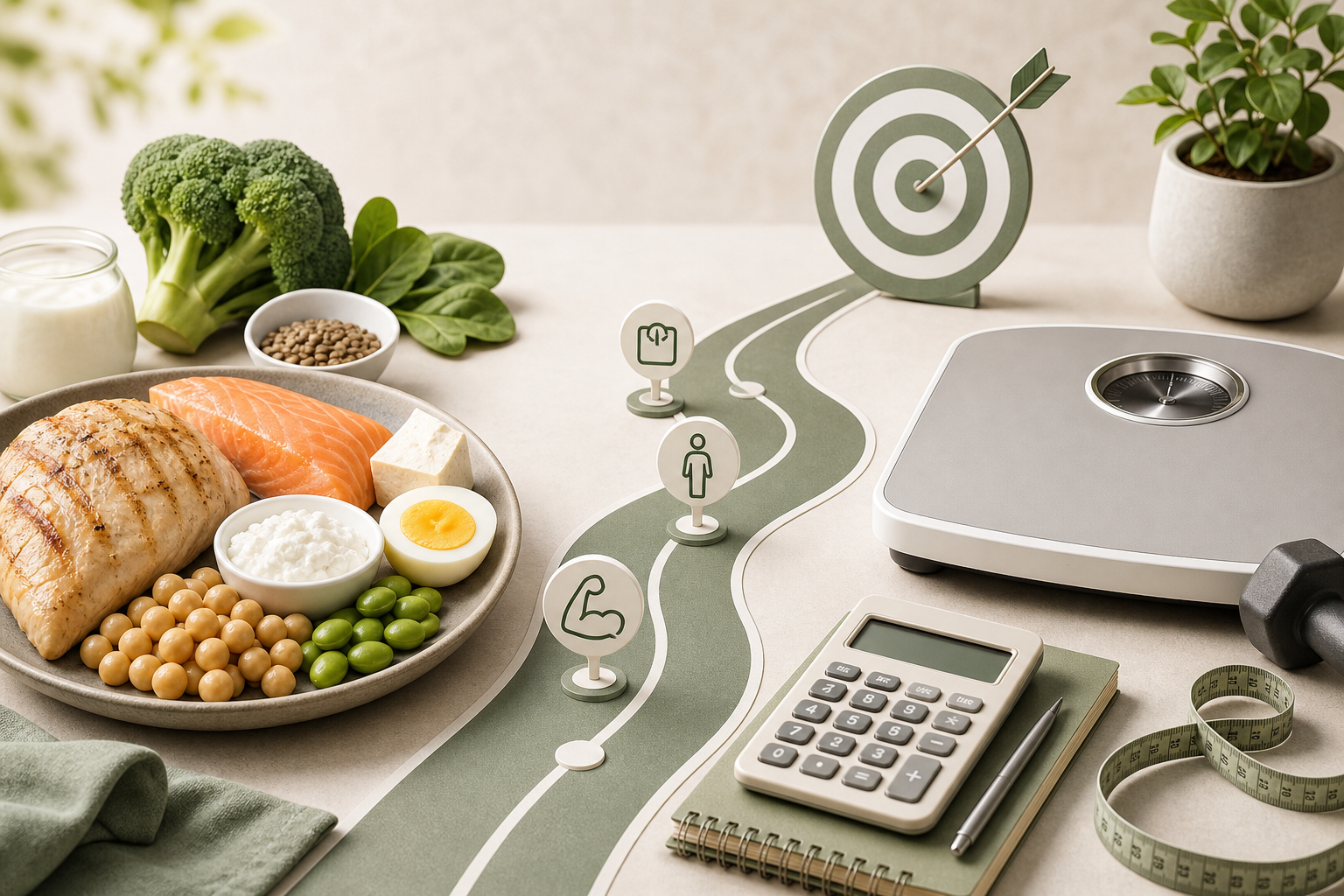
Protein intake during weight loss matters because protein supplies amino acids for tissue maintenance and can help meals feel satisfying. Within an energy-controlled diet, an appropriate intake may also support the retention of lean mass, especially when combined with resistance exercise. However, protein is only one part of the diet: total energy intake, food quality, activity, sleep, health status and consistency also influence weight-management outcomes.
Protein intake during weight loss: what role does it play?
Weight loss occurs when energy intake remains below energy expenditure over time. Protein does not override this energy balance, but it can make an energy-controlled eating pattern easier to structure.
Protein-containing meals may feel more filling than meals that provide little protein. This can help some people manage hunger between meals, although appetite responses vary and depend on the whole meal, including its fibre, fat, volume and energy content.
Protein also provides the amino acids used to maintain and repair body tissues. During weight loss, changes in body weight can include both fat mass and lean mass. Adequate protein, alongside an appropriate exercise programme, can support lean-mass retention, but it cannot guarantee that all weight lost will come from body fat.
How much daily protein intake is appropriate?
There is no single protein target that is suitable for everyone. Requirements and useful planning targets can vary with body weight, age, physical activity, overall energy intake, dietary pattern, pregnancy, health status and training goals.
The National Academies’ Dietary Reference Intakes provide a general adult Recommended Dietary Allowance of 0.8 grams of protein per kilogram of body weight per day. This is a population reference intended to meet the needs of most healthy adults, not a personalised target for fat loss, athletic training or a medical condition.
Some people choose a higher grams-per-kilogram planning level during weight loss, particularly if they exercise regularly or want to prioritise lean-mass support. A higher number is not automatically better, and the most suitable level depends on individual circumstances and the practicality of fitting protein into a balanced diet.
It is also important to distinguish a calculated target from measured intake. A protein calculator produces an estimate based on the weight and planning level entered. Actual intake must be assessed from foods and drinks, and even food-label or tracking-app values have some uncertainty.
How the protein calculator works
The protein calculator estimates protein in grams per day using body weight and a selected grams-per-kilogram level. Its calculation is:
Daily protein grams = body weight in kilograms × selected grams per kilogram
- Choose the requested unit system.
- Enter body weight or the other measurements requested by the tool.
- Select a grams-per-kilogram planning level.
- Calculate the estimated daily protein amount.
- Review the explanation and limitations before using the result for meal planning.
Example calculation
For a person weighing 80 kilograms who selects 1.2 grams per kilogram, the calculation is:
80 kg × 1.2 g/kg = 96 grams of protein per day
The result of 96 grams is a planning estimate, not a measured biological requirement. Choosing a different level changes the result even when body weight stays the same.
If body weight is entered in pounds
A tool may convert pounds to kilograms before applying the formula. For a manual estimate, divide weight in pounds by approximately 2.205, then multiply the kilogram value by the selected grams-per-kilogram level. Small differences can occur because of rounding.
What the calculator can and cannot tell you
A calculator is useful for comparing planning assumptions. It can show how body weight and the chosen protein level affect estimated daily protein intake, and it can turn an abstract grams-per-kilogram figure into a practical daily amount.
The calculator can help with:
- estimating protein grams from body weight;
- comparing different selectable planning levels;
- setting a consistent number for meal planning;
- reviewing whether a current food plan is broadly close to an intended target.
It cannot determine:
- your exact physiological protein requirement;
- whether a selected level is medically appropriate;
- how much lean mass you will retain during weight loss;
- whether a higher intake will reduce hunger for you;
- the energy deficit needed for a particular rate of weight change;
- the nutritional quality of the foods supplying the protein.
The estimate is only as useful as its inputs. Body weight changes over time, and the selected grams-per-kilogram value is an assumption rather than a laboratory measurement. People who need individualised medical nutrition advice may require a different assessment.
Using a protein estimate in an energy-controlled diet
A daily total becomes more practical when it is translated into meals and snacks. Rather than leaving most protein for one meal, many people find it easier to include a protein source at several eating occasions.
For example, someone with an estimated target of 96 grams might plan protein-containing breakfast, lunch and dinner, then use the remaining amount in a snack if needed. The portions do not have to be identical. The aim is to create a workable pattern while keeping total food intake aligned with the broader energy plan.
Useful protein sources may include fish, poultry, eggs, dairy foods, lean meat, tofu, tempeh, beans, lentils, peas, soya foods, nuts and seeds. Different foods provide different amounts of protein, energy, fibre, fat and micronutrients, so portion size and the overall meal still matter.
Plant-based eating patterns can provide adequate protein, but they may require more deliberate variety and planning. Combining a range of legumes, soya foods, grains, nuts and seeds across the day can make the target easier to reach without requiring every meal to contain the same foods.
Protein supplements are optional rather than essential. They may be convenient, but ordinary foods can also meet protein needs while supplying other nutrients. If a supplement is used, its protein and energy should be counted as part of the daily diet rather than treated as additional “free” nutrition.
Balancing protein with the rest of the diet
Increasing protein can affect what remains in the eating plan. If protein foods are simply added without adjusting anything else, total energy intake may rise, which can reduce or remove the intended energy deficit.
A balanced plan should still make room for vegetables, fruit, whole grains or other carbohydrate foods, sources of dietary fat and enough fluid. Fibre-rich foods can contribute to fullness and digestive health, while carbohydrate and fat remain important energy sources.
Food preparation also changes the energy content of a meal. Grilling, baking or steaming a protein food may produce a different total from frying it or serving it with energy-dense sauces. Looking only at protein grams can therefore give an incomplete picture.
Resistance exercise may complement a protein-focused plan by giving the body a reason to retain and use muscle tissue. Exercise choices should match current ability, access and health circumstances; more protein does not substitute for muscle-loading activity.
Frequently asked questions
Is more protein always better for weight loss?
No. Higher intake does not automatically produce greater weight loss, and protein still contributes energy. The useful amount is one that supports nutrition, satisfaction and lean-mass goals while fitting within the overall eating plan.
Should I calculate protein from current weight or goal weight?
The calculator estimates from whichever body weight is entered. Using current weight directly follows the stated formula, while another reference weight represents a different planning assumption. For people at body-weight extremes or with specialised needs, a simple weight-based calculation may be less suitable.
Do I need to reach the exact number every day?
A calculator result is better treated as a planning estimate than a precise daily threshold. Food portions, label values and tracking methods all involve variation. Looking at the general pattern over several days may be more practical than trying to match the number exactly at every meal.
Can protein prevent muscle loss during dieting?
Protein can support tissue maintenance, but it cannot guarantee complete preservation of lean mass. The size and duration of the energy deficit, resistance activity, training experience, age and other individual factors may all influence body-composition changes.
When might a higher-protein target need individual review?
Individual guidance may be important when health conditions, pregnancy, older age, recovery from illness, highly restrictive diets or specialised athletic goals affect nutritional needs. Higher intakes may not be appropriate for everyone, particularly when medical nutrition management is required.
Putting the estimate in context
Protein intake during weight loss is most useful when considered as part of the complete eating and activity plan. A reasonable estimate can help organise meals, support satiety and provide the amino acids needed for tissue maintenance, but it does not predict weight loss or body-composition results.
Use the calculated number as a starting point, check how it fits with food preferences and total energy intake, and remember that the selected grams-per-kilogram level is an assumption. Changes in body weight, activity or health circumstances may also change the relevance of the original estimate.