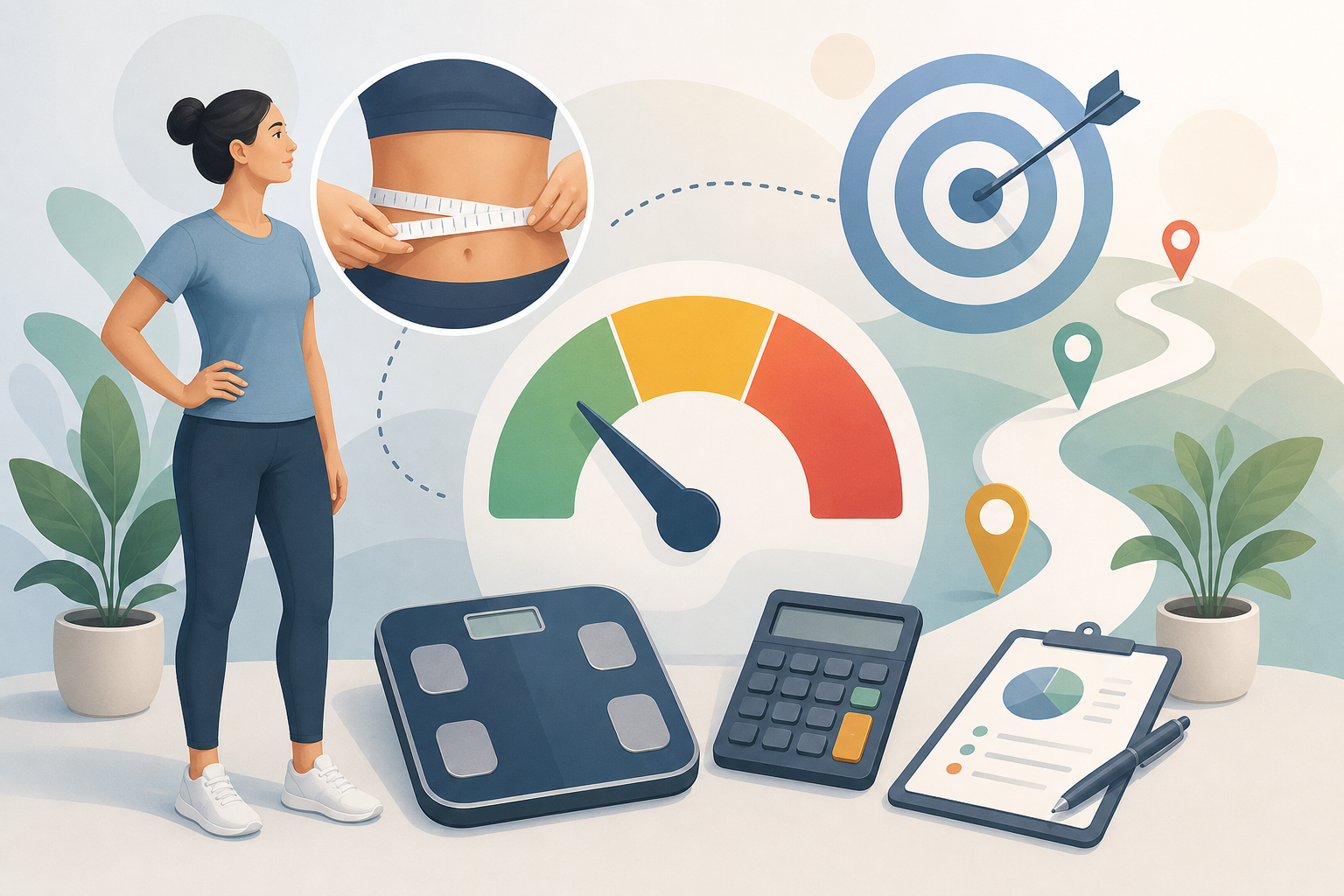
A waist to height ratio result shows how your waist circumference compares with your height. A higher result means your waist is larger relative to your height, while a lower result means it is smaller relative to your height. This ratio is an estimate of central body size, not a diagnosis or a complete assessment of health.

What a waist to height ratio result means
Waist-to-height ratio expresses waist circumference as a proportion of height. For example, a result of 0.49 means the waist measurement is equal to 49% of the person’s height.
The result is unitless. You can use centimetres, inches or another length unit, provided that waist and height are entered in the same unit. Using different units without converting them will produce an incorrect result.
Broadly, a higher waist height ratio indicates a larger waist in relation to height. A lower ratio indicates a smaller waist in relation to height. This makes the ratio useful for describing central body size, but it does not explain why a person has a particular measurement or establish their health status.
Some tools or health resources divide results into interpretive ranges. These ranges should be treated as screening guidance rather than firm boundaries. A small difference around a category cut-off may reflect normal measurement variation rather than a meaningful change.
How the ratio is calculated
The calculation is straightforward:
Waist-to-height ratio = waist circumference ÷ height
Suppose a person has a waist circumference of 85 cm and a height of 175 cm:
85 ÷ 175 = 0.486
Rounded to two decimal places, the result is 0.49. This means the waist circumference is about 49% of the person’s height.
The same calculation works in inches. If both measurements are converted accurately, the result remains the same. For example, converting both 85 cm and 175 cm into inches would still produce a ratio of approximately 0.49.
Why measurement consistency matters
A waist-to-height calculation is only as reliable as the measurements entered. Height is usually relatively stable in adults, but waist circumference can vary with measurement location, posture, breathing, clothing and tape tension.
Measure the waist in the same way each time
Different measurement protocols may use different anatomical locations. Rather than switching between locations, follow one clearly defined method and use it consistently when comparing results over time.
- Use a flexible, non-stretch measuring tape.
- Measure directly against the body or over light clothing.
- Keep the tape level rather than angled around the waist.
- Hold the tape snugly without compressing the skin.
- Stand in a relaxed position and avoid deliberately pulling in the abdomen.
- Record the measurement location so it can be repeated later.
If an unexpected result appears, repeat the measurement before interpreting it. Taking two measurements under similar conditions can help identify a reading error.
Use an accurate height measurement
Measure height without shoes, standing upright on a level surface. Enter measured height where possible rather than relying on a remembered or estimated value.
Consistency is especially important when tracking change. A difference caused by moving the tape to another part of the waist should not be treated as a definite change in central body size.
How this result fits with other body-size measures
Waist-to-height ratio and BMI describe different aspects of body size. BMI compares weight with height, whereas waist-to-height ratio compares waist circumference with height. Neither measure directly determines body composition or provides a full picture of health.
The waist height ratio may complement BMI because it adds information about central body size. However, it does not directly measure abdominal fat, distinguish fat from other tissue or show where all body tissue is distributed.
Body-size measures are generally considered alongside wider context. The National Institute of Diabetes and Digestive and Kidney Diseases provides broader information about weight management and factors that may affect body weight and health.
Relevant context can include measurement technique, age, growth stage, pregnancy, recent changes in body size, medical history and other assessments. A single calculated number cannot combine all of these factors.
What the waist to height ratio calculator can and cannot tell you
What it can tell you
A waist to height ratio calculator can divide your entered waist circumference by your entered height. It can provide a consistent result without requiring manual arithmetic.
The calculator can also help you:
- express your waist as a proportion of your height;
- avoid calculation and rounding errors;
- compare measurements taken using the same method; and
- review broad supporting information supplied with the result.
What it cannot tell you
The calculator cannot verify whether the waist or height measurement was taken correctly. It also cannot directly measure body fat, muscle mass, internal fat or overall health.
A calculated ratio cannot:
- diagnose a health condition;
- explain the cause of a particular waist measurement;
- predict what will happen to an individual’s health;
- replace other relevant measurements or clinical information; or
- confirm that a small change between readings is meaningful.
The displayed value is a calculated estimate based on the numbers entered. It is not a laboratory measurement or a direct scan of body composition.
How to interpret changes over time
When measurements are collected consistently, the direction of change may provide more useful context than one isolated reading. A ratio that changes over time may reflect a change in waist circumference, height or both.
For most adults, height changes little over a short period, so short-term differences usually come from the waist entry or from measurement variation. Children and adolescents are still growing, which makes interpretation more complex because both height and waist circumference can change.
A practical tracking scenario
Consider an adult whose height is 170 cm. A waist measurement of 86 cm gives a ratio of approximately 0.51. At a later measurement, a waist of 84 cm gives a ratio of approximately 0.49.
The calculation shows a lower ratio, but interpretation depends on whether both waist measurements were taken at the same location and under similar conditions. If the tape location or technique changed, some or all of the difference may be measurement variation.
Avoid placing too much importance on very small movements in the result. Recording the date, waist location, units and measurement conditions makes later comparisons easier to understand.
Frequently asked questions
Is waist-to-height ratio the same as waist circumference?
No. Waist circumference is a direct length measurement, such as 85 cm. Waist-to-height ratio divides that measurement by height, producing a unitless proportion such as 0.49.
Should I enter centimetres or inches?
Either can work. Waist and height must use the same unit. Do not divide a waist measurement in inches by a height measurement in centimetres.
Why did my result change when my body size seemed unchanged?
Possible reasons include a different tape location, tighter or looser tape tension, posture, breathing, clothing or rounding. Repeat the measurement using the same method before drawing conclusions from a small difference.
Can two people with the same waist have different results?
Yes. Because height is part of the calculation, the same waist circumference produces a lower ratio for a taller person and a higher ratio for a shorter person.
Does a lower result always mean better health?
No. The result describes waist size relative to height; it does not determine overall health. Health cannot be inferred from one body-size measure alone, and an unusually low or changing result may also require context.
Can I compare my result with someone else’s?
The arithmetic allows comparison, but personal comparisons can be misleading. Differences in age, growth stage, measurement method and individual circumstances may affect what the numbers mean.
Putting your result in perspective
A waist to height ratio result is best understood as a simple description of central body size. It shows the proportion between two measurements, but it does not independently identify risk, diagnose a condition or explain overall health.
Use accurately measured values, keep the units the same and follow a consistent waist-measurement method. When reviewing results over time, consider possible measurement variation and interpret the ratio alongside other relevant information rather than as a stand-alone conclusion.